
Church LED Display Buying Guide
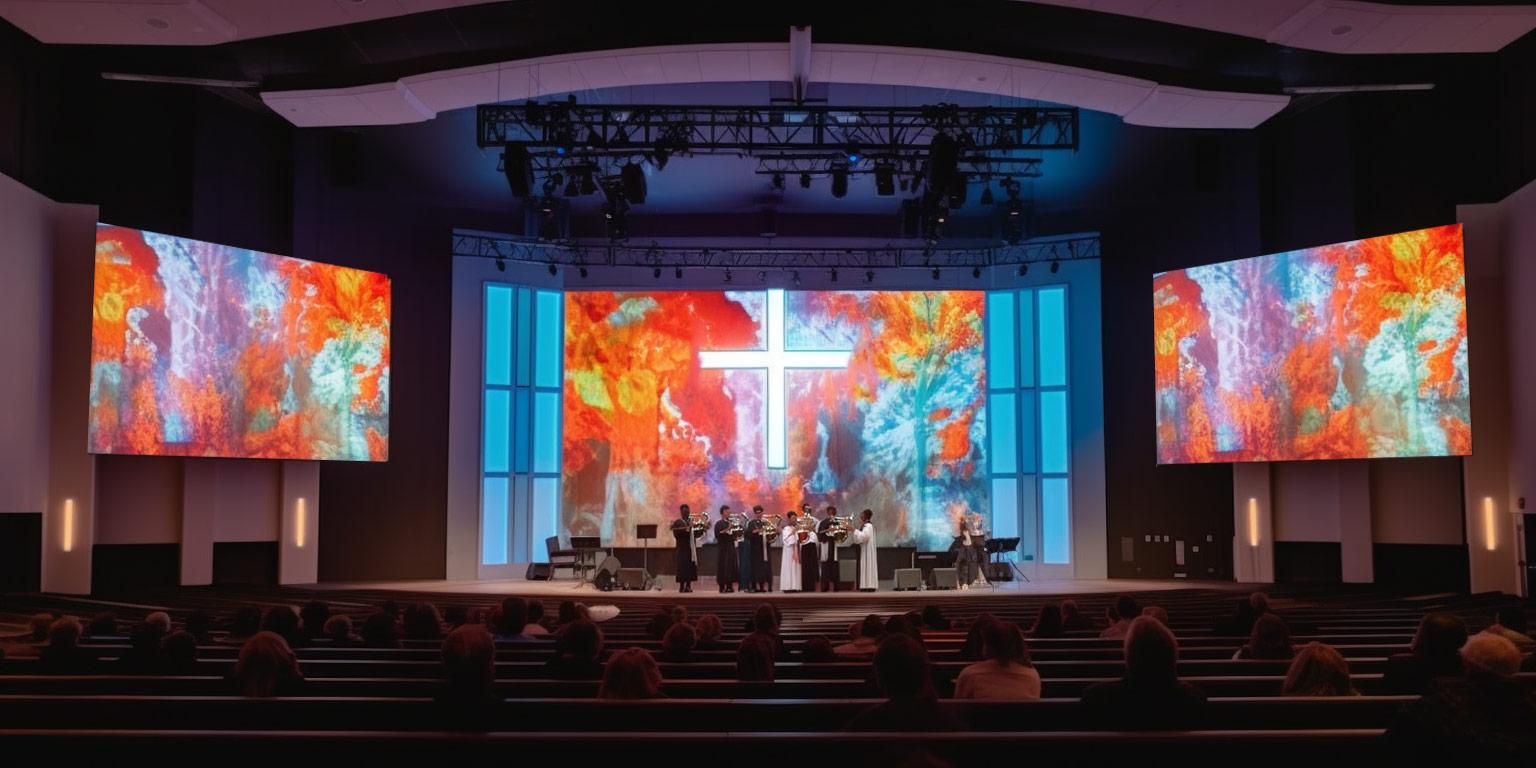
Planning to install an LED display in your church? This guide explains how to choose the right church LED display based on screen size, pixel pitch, viewing distance, budget, and worship environment, helping you create a more engaging and inspiring worship experience.
Church LED Display Buying Guide (2026): How to Choose the Right LED Screen for Your Worship Space
Modern churches are embracing LED display technology to create more engaging worship experiences. From displaying worship lyrics and sermon notes to live video and multimedia presentations, LED video walls have become an essential part of today's worship environment.
However, choosing the right church LED display requires careful planning. Factors such as sanctuary size, viewing distance, screen resolution, pixel pitch, and budget all play an important role in selecting the ideal solution.
This guide will help you understand the key considerations when choosing an LED display for your church.
Why Churches Are Choosing LED Displays
Traditional projection systems have served churches for many years, but they often struggle with brightness, image clarity, and maintenance.
LED displays offer several important advantages:
Brilliant image quality
Excellent visibility in bright environments
Seamless large-format displays
Long service life
Low maintenance requirements
Flexible screen sizes and configurations
Superior reliability for weekly worship services
For many churches, an LED display has become a long-term investment that enhances worship while improving communication with the congregation.
Determine Your Worship Space
The first step is understanding where the LED display will be installed.
Common church applications include:
Main Sanctuary
Large LED video walls provide clear visibility for worship lyrics, sermon presentations, scripture, and live video throughout the sanctuary.
Church Stage
Many churches install LED displays behind the worship team to create immersive visual backgrounds during praise and worship.
Youth Ministry
Youth rooms often benefit from vibrant LED displays that support modern worship, teaching, and multimedia presentations.
Church Lobby
Digital displays in the lobby can welcome visitors, announce upcoming events, share ministry information, and promote community activities.
Choosing the Right Screen Size
Screen size should be based on:
Sanctuary dimensions
Audience seating layout
Viewing distance
Stage design
Ceiling height
Rather than choosing the largest screen possible, churches should select a display that provides comfortable viewing for every seat.
A professional site survey helps determine the ideal display size for your worship space.
Understanding Pixel Pitch
Pixel pitch refers to the distance between LED pixels.
Smaller pixel pitches provide higher resolution for close viewing.
Typical recommendations include:
P1.2 – P1.8: Small chapels and close viewing.
P2.5: Medium-sized sanctuaries.
P2.9 – P3.9: Large worship centers and church stages.
Selecting the correct pixel pitch improves image quality while helping control project costs.
Brightness Matters
Churches typically do not require extremely high-brightness displays.
Most indoor worship environments perform well with displays ranging from 600 to 1,200 nits, providing comfortable viewing without overwhelming the audience.
For churches with significant natural light, higher brightness levels may be recommended.
Recommended Products
Pacific LED Solutions recommends the following products for church applications:
Indoor LED Video Wall
Fine Pixel LED Display
All-in-One LED Display
Mobile LED Poster Display (for church lobbies and events)
Each solution can be customized based on your ministry's needs and available space.
Installation Considerations
A successful church LED project involves more than selecting a display.
Professional installation includes:
Site survey
Structural evaluation
Power planning
Control system configuration
Display calibration
Staff training
Final system testing
Working with an experienced installation team ensures reliable performance and long-term value.
Budget Planning
The total cost of a church LED display depends on several factors, including:
Screen size
Pixel pitch
Mounting structure
Installation complexity
Video processor
Control system
Electrical work
Rather than focusing only on initial cost, churches should consider the long-term value, reliability, and reduced maintenance that professional LED systems provide.
Why Choose Pacific LED Solutions?
Pacific LED Solutions specializes in customized LED display solutions for churches throughout Southern California.
We provide:
Free Consultation
Site Survey
Custom Solution Design
Professional Installation
Ongoing Technical Support
Our team works closely with pastors, church leadership, and audiovisual teams to design LED systems that support worship, strengthen communication, and fit each church's budget and ministry goals.
Frequently Asked Questions
What is the best pixel pitch for a church?
For most churches, P2.5 to P3.9 offers an excellent balance between image quality and cost. Smaller pixel pitches are ideal for shorter viewing distances.
Can LED displays replace projectors?
Yes. LED displays provide higher brightness, better image quality, seamless visuals, and significantly lower long-term maintenance compared to traditional projection systems.
How long do church LED displays last?
Commercial-grade LED displays are designed to operate for up to 100,000 hours, providing many years of reliable service.
Do you provide installation?
Yes. Pacific LED Solutions offers complete consultation, professional installation, system configuration, and ongoing support throughout Southern California.
Final Thoughts
A well-designed LED display can transform the worship experience by improving visibility, enhancing communication, and creating a more engaging environment for every member of the congregation.
If you're planning to upgrade your church's audiovisual system, Pacific LED Solutions is ready to help you design the right LED display solution for your worship space.
Contact us today for a free consultation and customized church LED display recommendation.